

Integrations Built for Signal, Not Noise
- compliance,
- engineering,
- soc2
One of the fastest ways compliance software loses credibility is by confusing imported data from third-party systems with a conclusion. A configuration setting comes in from GitHub, and the platform starts acting as if a control has been validated. An identity event arrives, and it gets treated like evidence. A cloud configuration sync completes, and suddenly a requirement looks satisfied. The workflow looks modern. The dashboard looks clean. The automation looks impressive… and yet the foundation is already compromised because the software never distinguished between source data and compliance meaning.
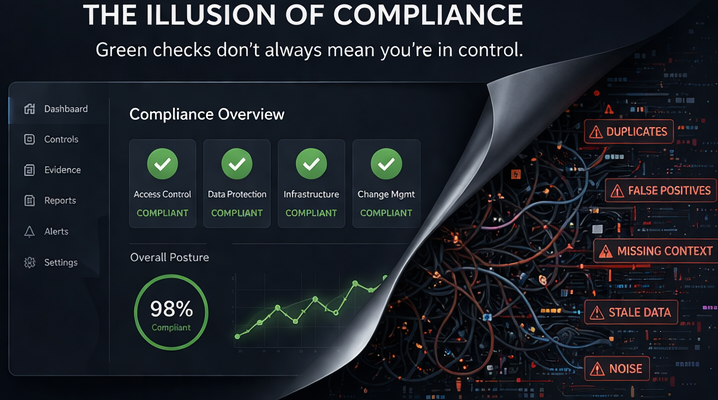
Everyone obviously wants automation. They want fewer screenshots, fewer spreadsheet rituals, fewer manual follow-ups, and fewer hours spent chasing information across the systems they already use. They want source data to stay current without someone constantly babysitting it. They want less collection work and faster visibility when something changes. But what they do not need is an integration that quietly inflates itself into a test, a validation engine, or an evidence factory. When this happens, you end up with a shortcut that trades honesty for convenience, and it usually ends in the same place: false positives, alert fatigue, shallow assurance, and a product people stop believing.
At Openlane, we are releasing a capability for integrating with your systems that’s designed to sync and aggregate data cleanly, keep it current, and reduce the cost of collection. It is intentionally not built to masquerade as a compliance test. Its job is to move facts into the platform with context and discipline. What those facts mean is a separate question, and it should stay separate.
That distinction really matters because most frustrations with compliance tools don’t stem from a lack of integrations. They are caused by what those integrations claim (and usually fail to deliver). If every imported record becomes an implied judgment, the platform starts manufacturing confidence that nobody actually earned. That is how teams end up with false positives, noisy alerts, and a growing sense that the product is overstating what it knows. The issue is not that data was collected. The issue is that the collection layer quietly promoted itself into a source of truth.
The outcome is better visibility without synthetic assurance.
Our capability is designed to improve data quality at the boundary, before imported information spreads through the rest of the product. Customers can scope what gets ingested through a flexible expression language so irrelevant provider activity is filtered earlier, where it is cheaper and less disruptive to handle. Putting the power into the hands of the user means they can prevent bad data from flowing into the product. They can reduce duplicate work. They can make synchronization more predictable, which makes the platform easier to trust when teams need to understand how a record got there and why it looks the way it does.
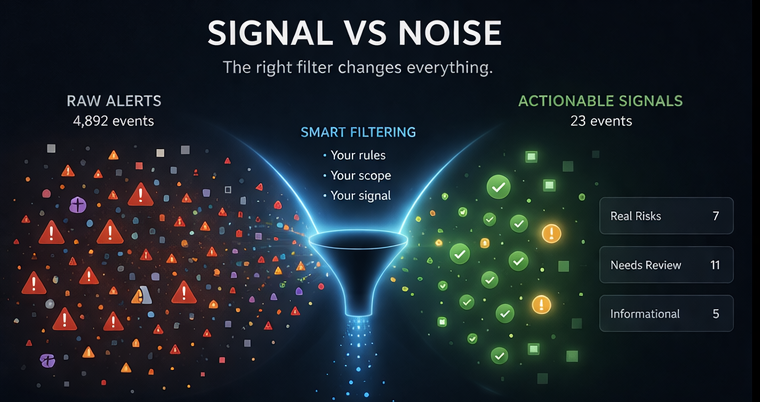
The biggest point, though, is the one too many vendors blur on purpose: synchronized data is not the same thing as evidence. Evidence is data tied to a claim, interpreted in context, and presented in a way that can stand up to scrutiny. A validation is not just “we saw a setting.” It is a conclusion about whether a condition was met under the right scope and assumptions. Those are higher-order judgments. If a platform wants to make them, it should do so explicitly and defensibly, not by smuggling them in through the integration layer.
Customer control over ingestion matters as much as raw connectivity. Teams need to be able to narrow what comes in, suppress irrelevant classes of data, and tailor synchronization to their environment without depending on black-box vendor behavior. All of the Openlane founders have lived through alert fatigue and the operational drag that poorly built systems create. We’ve seen what happens when software generates work instead of reducing it, and we’ve seen how often vendors in the compliance automation market overpromise by dressing up raw integrations as certainty. That is the status quo we want to challenge.
Note from the author: If you're a gopher, tech enthusiast, or simply bored and curious - I've considered writing a technical blog on the development challenges, decisions, or architecture, but would love targeted questions / topics to write about. If you'd be interested in reading and would like me to publish something you're curious about, hit me up on Linkedin!


'%3e%3cg id='Final-Copy-2_2_' transform='translate(1275.000000, 200.000000)'%3e%3cpath class='st0' d='M7.4,12.8h6.8l3.1-11.6H7.4C4.2,1.2,1.6,3.8,1.6,7S4.2,12.8,7.4,12.8z'/%3e%3c/g%3e%3c/g%3e%3c/g%3e%3cg id='final---dec.11-2020'%3e%3cg id='_x30_208-our-toggle' transform='translate(-1275.000000, -200.000000)'%3e%3cg id='Final-Copy-2' transform='translate(1275.000000, 200.000000)'%3e%3cpath class='st1' d='M22.6,0H7.4c-3.9,0-7,3.1-7,7s3.1,7,7,7h15.2c3.9,0,7-3.1,7-7S26.4,0,22.6,0z M1.6,7c0-3.2,2.6-5.8,5.8-5.8 h9.9l-3.1,11.6H7.4C4.2,12.8,1.6,10.2,1.6,7z'/%3e%3cpath id='x' class='st2' d='M24.6,4c0.2,0.2,0.2,0.6,0,0.8l0,0L22.5,7l2.2,2.2c0.2,0.2,0.2,0.6,0,0.8c-0.2,0.2-0.6,0.2-0.8,0 l0,0l-2.2-2.2L19.5,10c-0.2,0.2-0.6,0.2-0.8,0c-0.2-0.2-0.2-0.6,0-0.8l0,0L20.8,7l-2.2-2.2c-0.2-0.2-0.2-0.6,0-0.8 c0.2-0.2,0.6-0.2,0.8,0l0,0l2.2,2.2L23.8,4C24,3.8,24.4,3.8,24.6,4z'/%3e%3cpath id='y' class='st3' d='M12.7,4.1c0.2,0.2,0.3,0.6,0.1,0.8l0,0L8.6,9.8C8.5,9.9,8.4,10,8.3,10c-0.2,0.1-0.5,0.1-0.7-0.1l0,0 L5.4,7.7c-0.2-0.2-0.2-0.6,0-0.8c0.2-0.2,0.6-0.2,0.8,0l0,0L8,8.6l3.8-4.5C12,3.9,12.4,3.9,12.7,4.1z'/%3e%3c/g%3e%3c/g%3e%3c/g%3e%3c/g%3e%3c/svg%3e)